English Dutch French German Italian Portuguese Russian Spanish

Search

New Accessible Lesson: Ancient Rome’s Veterans with Disabilities: Roman Accounts and U.S. Veteran Comparisons

Published on Tue, 01/08/2019
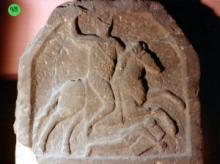
Teachers have been striving to make their curriculum more fully reflect the history of all members of a community, to tell the stories not only of kings and generals, but of the young and the old, women and men, and those with both extraordinary and ordinary abilities and challenges. The lesson added to our resource library this week is an example of how to bring this perspective to the study of the Ancient World, using the words of writers at that time, as well as images of artifacts, and drawing comparisons with examples from U.S.
New Lesson: Reforming America with Dix and Mann

Published on Sat, 03/31/2018

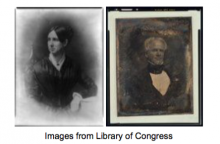
The instrumental role Dorothea Dix played in reforming prisons and mental institutions, and the actions of Horace Mann in his campaign for free public education are at the center of this lesson. How did improvements in conditions for people in the public charge, whether prisoners or people institutionalized because of disability, come about? How did the the idea of who gets to be educated change?

Model Lesson Plans: Spanish Civil War Propaganda

Published on Wed, 12/17/2014

Arriba España!

As the Spanish Civil War raged between 1936­-1939, struggles between competing ideologies played out on the streets as well as in the trenches. As much of Europe prepared for another global war, the military and social clashes in Spain served a dress rehearsal for potent new tools of propaganda as well as deadly new weapons and tactics. Spanish political factions: fascist, communist, anarchist, republican, nationalist, and socialist – all sought support from the Spanish people as well as allies abroad.

Students Uncover Berkshire County Past, Mill by Mill

Published on Mon, 01/07/2013

Exploring Emerging America’s Windows on History Program

Since 2006, Emerging America’s Windows on History program has mobilized more than 30 research teams of K-12 students with their teachers and in partnership with historical societies, museums, town and college libraries, expert individuals, and other very local resources. Students learn to think historically as they track down primary sources to tell the story of their communities and their place in the world.

Family's History Opens Window into Belchertown’s Past

Published on Fri, 12/14/2012

Exploring Emerging America’s Windows on History Program

Since 2006, Emerging America’s Windows on History program has mobilized more than 30 research teams of K-12 students with their teachers and in partnership with historical societies, museums, town and college libraries, expert individuals, and other very local resources. Students learn to think historically as they track down primary sources to tell the story of their communities and their place in the world.

A Robust History of Ludlow, in Primary Sources

Published on Fri, 11/30/2012

Exploring Emerging America’s Windows on History Program

Since 2006, Emerging America’s Windows on History program has mobilized more than 30 research teams of K-12 students with their teachers and in partnership with historical societies, museums, town and college libraries, expert individuals, and other very local resources. Students learn to think historically as they track down primary sources to tell the story of their communities and their place in the world. This is the third in our series of close-ups on these sites.

Black Agency: The African American Struggle for Equality: Part 1

Published on Sat, 04/21/2012

In Fairbury, Nebraska–pop. 5,000–where I grew up in the 1960s, there lived literally zero black people. It was not by chance: the Klan and its allies had driven blacks out of much of the rural Midwest. (My parents' Civil Rights advocacy found scant welcome in my home town. But that's another story.) When I was in 6th grade, my older, wiser brother (a 9th grader) handed me the Autobiography of Malcolm X and set me on a journey that compels me still. More recently, two scholars in our Teaching American History (TAH) program reset my world view as powerfully as my brother did back in 1971.

Double Victory

Published on Wed, 03/28/2012

Guest Post: Rusty Annis, Belchertown, Massachusetts, Teacher World War II marked a watershed for American identity, equality and opportunity. Advocates called bastions of racism into question and for the first time effectively challenged many aspects of discrimination. The war gave minorities (including women) a chance to contribute in a noticeable way to American society. It was not an easy transition. Horrifying reactions occurred. Axis propagandists used America racism to knock America off its high horse of moral superiority. An excellent book utilizing personal accounts from this time period is Double Victory, by Professor Ronald Takaki (Back Bay Books, Little, Brown and Co. New York). Takaki gives an overview of many ethnic stories of striving for American identity. The phrase double victory refers to a February 7, 1942 letter to the editor of the Pittsburgh Courier from James G. Thompson, encouraging equality for people of color in the United States. “The first V for victory over our enemies from without, the second V for victory over our enemies from within.” Link to a wiki on the impact of the Double Victory Campaign. (The "Double V for Victory" button by the page title leads to a unique large photo of a Double V rally.)
Subscribe to History Content