Guest Blog Post: Defining Civic Equity for Students with Disabilities
Published on Fri, 03/04/2022
Updated 07-15-2022
By Leah Bueso
Civic Engagement Research Group, University of California, Riverside
“Disability is a natural part of the human experience and in no way diminishes the right of individuals to participate in or contribute to society.”
- Individuals with Disabilities Education Act of 2004
Precursor to Progressivism: The Northampton Association of Education and Industry
The following lesson serves as an introduction to the Age of Progressivism. In this unit, students should connect the various ways individuals and communities respond to new innovations. In response to industrialization, civilizations across the globe reacted in a number of ways ranging from violent protests to political engagement to isolating from the political process. In the early 1840s in a town in western Massachusetts, Northampton, the Northampton Association of Education and Industry (NAEI), formalized their beliefs in a binding constitution.
The Emergence of Special Education
How do changes in the treatment of students with special education needs over time show society’s changing understandings of disability? The 19th century initiatives to provide supports for people with disabilities, including the founding of schools for students with cognitive, hearing, or vision disabilities, were an important component of the social reform movements in the period before the US Civil War.
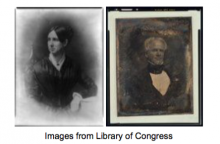
New Lesson: Reforming America with Dix and Mann
Published on Sat, 03/31/2018
The instrumental role Dorothea Dix played in reforming prisons and mental institutions, and the actions of Horace Mann in his campaign for free public education are at the center of this lesson. How did improvements in conditions for people in the public charge, whether prisoners or people institutionalized because of disability, come about? How did the the idea of who gets to be educated change?