Why Teach Disability History? 2023
Published on Wed, 02/08/2023
"Why Didn't Anyone Teach Me This?"
Reform to Equal Rights: K-12 Disability History Curriculum is now open!
Published on Wed, 02/08/2023
Reform to Equal Rights: K-12 Disability History Curriculum is now open!
Published on Thu, 01/12/2023
When the Library of Congress launched the national “library service for blind patrons” (NLS) in 1931, it marked a key point in the history of intellectual, professional, and civic life for disabled Americans. The U.S. Government would henceforth take the leading role in ensuring that news, research, literature, and ideas are available nationwide for blind and visually impaired Americans.
Published on Mon, 09/12/2022
By Rich Cairn, Emerging America
At the end of the 2021-2022 school year, Emerging America widely promoted an online survey of teachers to discover how much U.S. students are taught Disability History. Though the response was small, the results offer intriguing insights. The survey will repeat in 2023 and 2024.
Published on Tue, 07/12/2022
Updated 07-12-2022
Link to the Reform to Equal Rights curriculum web page.
Opening in February, 2023.
King Tutankhamun was a pharaoh who became a leader at age 9. His tomb is a rich source of art and information about the time in which he lived. He was also a leader with a physical disability.
Published on Fri, 07/17/2020
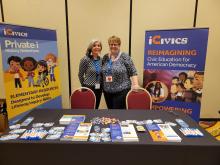
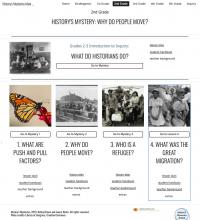
NOTE: First developed at Emerging America, History's Mysteries has become Private i History Detectives, a product of iCivics.
Keep at hand all seven items in the Emerging America Lesson Design Toolkit to support strong lesson plan development. You will also need copies of applicable academic standards and, of course, your text set, and any other support materials for the lesson. Refer to each tool to broaden choices for you and for students. The tools help make precise and clear the language in lesson objectives, instructions for assignments, rubrics, graphic organizers, and other handouts.
Published on Sat, 11/16/2019
Following years of decline in the teaching of History and Social Science, especially in grades K-5, and neglect of civics by schools at all grades, the Massachusetts Legislature and Board of Education each took decisive action in 2018. New state History and Social Science standards elevate civics in the context of inquiry-based Practice Standards, and the Civic Engagement Act mandates opportunities for civic action by all learners.
In this lesson, students learn about the Social Security Act and its provisions to care for the elderly, the unemployed, mothers and children, and children and adults with disabilities. Students will examine several primary source images and documents related to the New Deal era, using a primary source analysis organizer. The lesson offers options in how students can show their learning. This lesson plan has a special feature: the teacher who authored it offers reflections on how teaching the lesson worked with her class when she taught it the first time.
Who gets accepted as a citizen or as an immigrant? Who is considered a desirable immigrant? Students will work in small groups to examine a primary source text and image set about immigrants at the turn of the 20th century. They will use the sources to develop a deeper understanding of the hurdles and discrimination many immigrant groups faced. In addition to learning about race-based entry policies, students will observe that many types of disabilities were considered undesirable and would keep an immigrant out.
© 2020 Collaborative for Educational Services - All Rights Reserved