


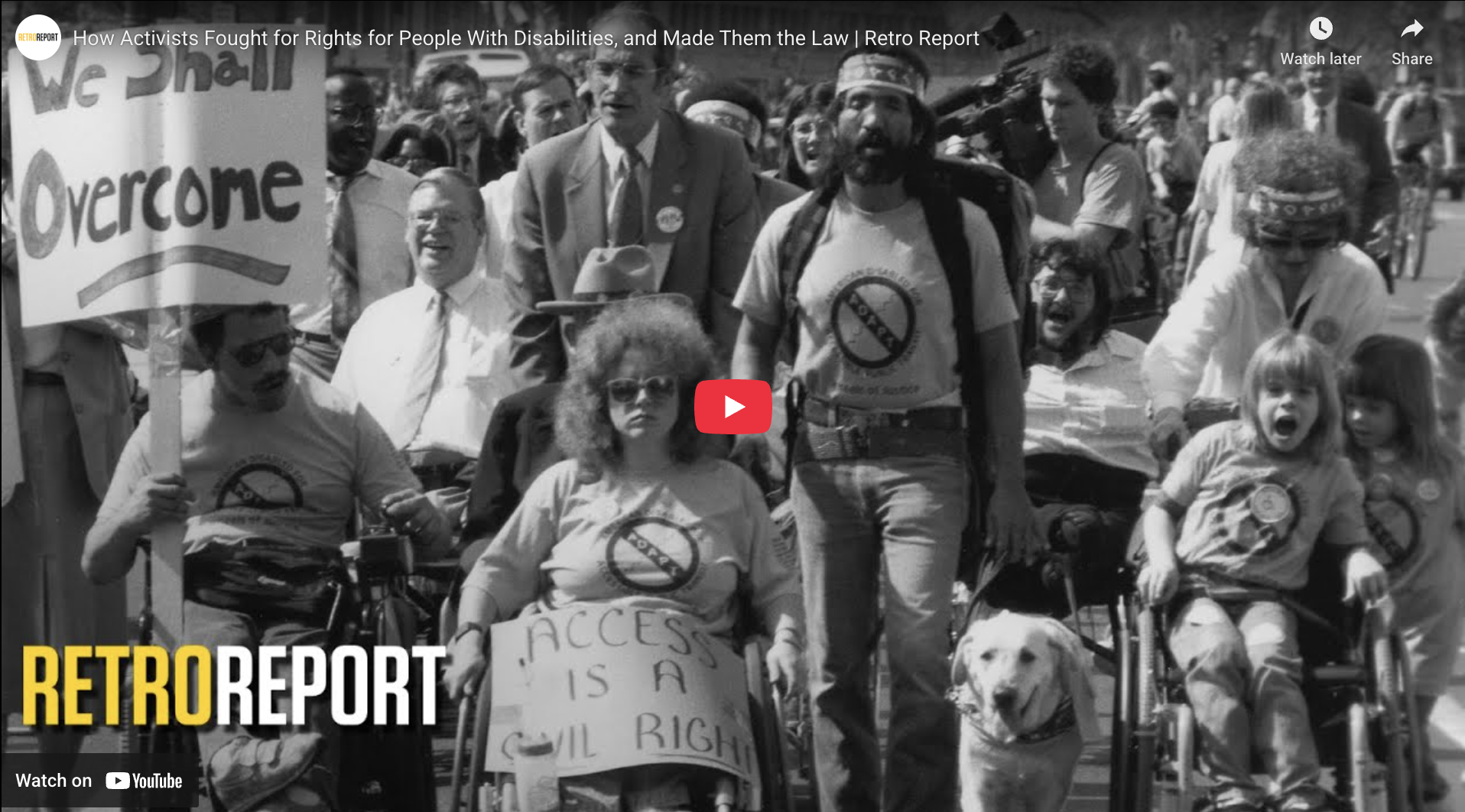
Classroom Friendly Video and Other Accessible Curriculum for Teaching the Disability Rights Movement
An array of powerful tools–some new–are now available to stimulate and support teaching about the Disability Rights Movement, focused on the 1970s through passage of the 1990 Americans with Disabilities Act.
On April 7, 2026 join Jill Rosenbaum, producer of the video "How Activists Fought for Rights for People With Disabilities, and Made Them the Law", from RetroReport during the Virtual Teaching Disability History Conference - 5:00-7:30pm Eastern Time. Info and registration.
As we have witnessed through our collaboration with National History Day, students are expressing growing interest in this epochal moment in human history. At Emerging America, we emphasize the importance of locating this transformative movement in the context of 250 years of struggle by disabled Americans for access, rights and ultimately full equality. Our curriculum: Reform to Equal Rights: K-12 Disability History therefore offers 23 accessible lessons in seven units that span this full history. The curriculum introduces concepts of disability itself and offers chapters of this history chronologically, with the option of research projects especially at the high school level. See specific lessons from the curriculum on the movement below.
Video
- How Activists Fought for Rights for People With Disabilities, and Made Them the Law (2025) - (12 minutes) - RetroReport. Includes a comparative lesson on strategies for activism and the campaign for the Americans with Disabilities Act.
- Change, Not Charity: The Americans with Disabilities Act (2025) (53 minutes) (Requires subscription) - American Experience, PBS. Includes articles and several short clips.
Lesson Plans
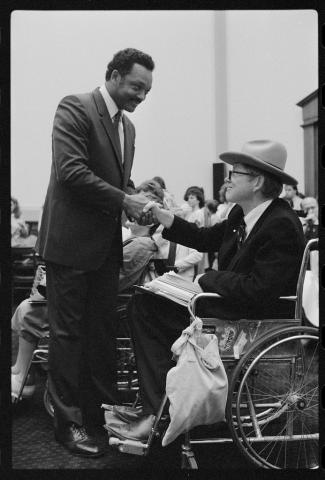
- Reform to Equal Rights: K-12 Disability History Curriculum - Emerging America - 23 lessons in seven units using 250+ primary sources. Lessons from this curriculum that focus on the movement from 1970 to the ADA in 1990 include:
- Grades 4-5 - Lesson 3: History of the Disability Rights Movement.
- Grades 4-5 - Lesson 4: How Disability Activists Created Change.
- Grades 9-12 - Lesson 1: The Roots of the Disability Rights Movement - A slide presentation on the long arc of disability history concludes with a summary of the campaign for the ADA and its consequences.
- Grades 9-12 - Lesson 2: Research and Share Disability Rights History.
- Hidden Voices: Americans with Disabilities in United States History - Free curriculum from the New York City Public Schools based on dozens of in-depth biographies of activists, including from this period. (Note: large digital files.)
- Disability Equality Education aims to inform all students about disability in a positive way. They have compiled a large list of lessons, many created by their members.
Guides for Student–and Teacher–Research on Disability History
- Reform to Equal Rights: K-12 Disability History Curriculum Grades 4-5 - Lesson 3: History of the Disability Rights Movement. Emerging America.
- Grades 9-12 - Lesson 2: Research and Share Disability Rights History - This lesson guides guides students through the research process: developing questions, choosing sources and analyzing the evidence.
- Student Research Guides from Keene State College and Emerging America include a guide on the Independent Living Movement and Deinstitutionalization.
- Overview Article: The Struggle for Disability Rights - This 2,500-word article summarizes 250 years of history. Features 50 links to resources and collections for teachers and student researchers. Learn more and download the article.
